
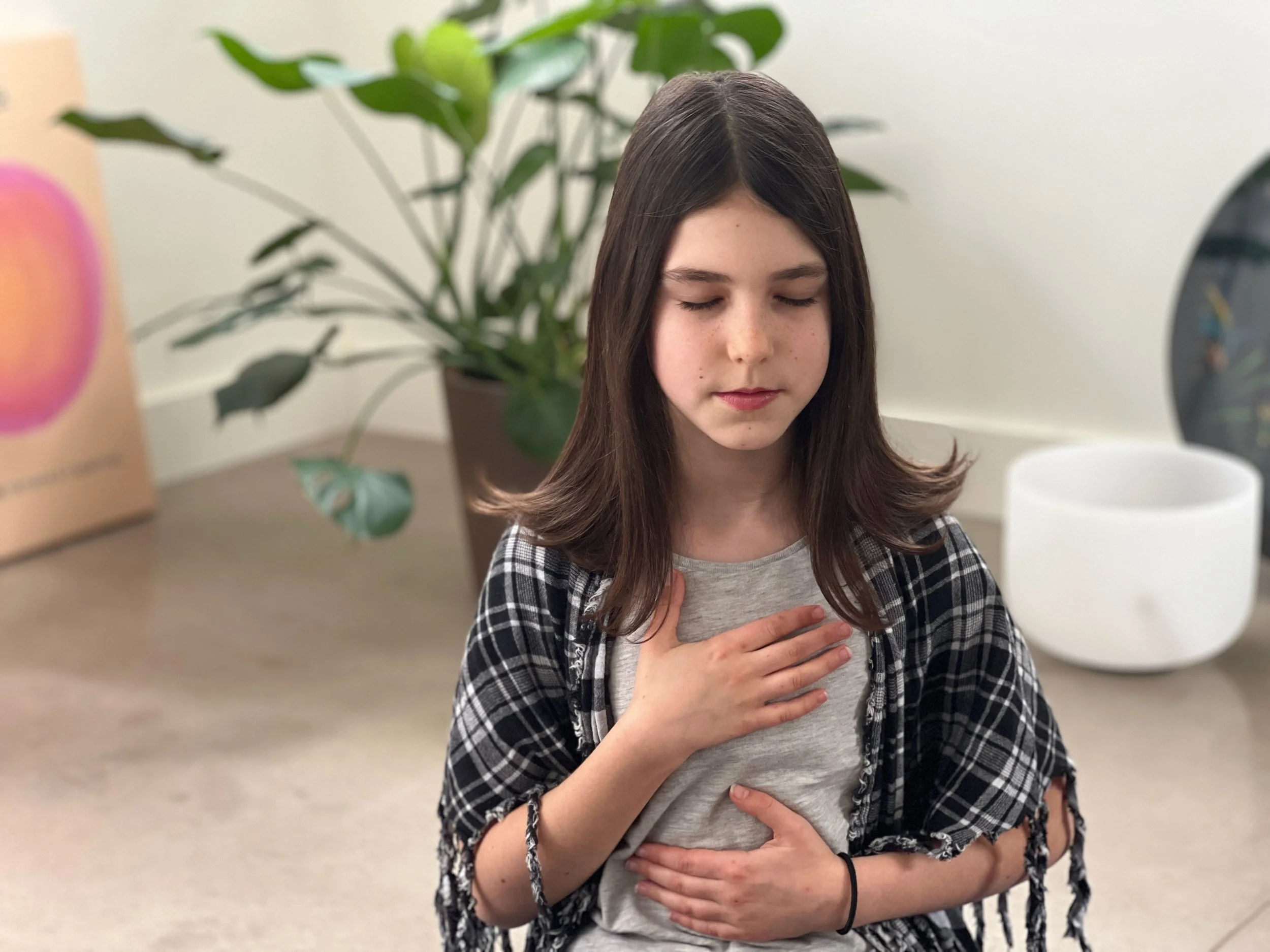
Guided breathing
for Kids
Guided breathing for children are short audio recordings that use breath, imagery and voice to help kids calm down, refocus and better understand what they are feeling.
These recordings were born from a simple desire: to give my own children a tool to navigate their emotions with more gentleness. Seeing the benefits in them, I felt called to share this tool with other families. Because breathing is something our children can carry with them for life.
— Catherine, mom and breathing guide → Learn more about Catherine
-
Through simple stories, mental imagery and age-appropriate breathing rhythms, the child is gently guided toward a calmer and more present state. These practices are inspired by recognized techniques of conscious breathing and nervous system regulation, adapted to the world and language of children.
-
Children approximately 5 to 12 years old.
Children who experience:
Intense emotions
Anxiety or restlessness
Difficulty falling asleep
Challenging transitions (school, separation, change)
But also for:
Curious children
Sensitive children
Calm moments (before bedtime, after school, etc.)
-
Breathing is a simple and natural tool that can help regulate the nervous system. Approaches such as slow, conscious breathing are associated with:
Reduced stress
Improved calm and attention
Better emotional regulation
⭐️ These effects are documented in research on breathing and nervous system regulation, particularly in the fields of psychology and neuroscience.
-
These audios can help the child:
Calm down more easily
Recognize and welcome their emotions
Develop self-soothing tools
Improve sleep quality
Create a moment of connection with themselves
Every child is different — these practices adapt to their own pace.
-
Find a quiet and comfortable spot, choose a recording, and simply listen. The audio will gently guide the child through a breathing practice at their own pace — no experience needed.
-
Examples:
Before bedtime
After school
After a meltdown or emotional overflow
To calm anxiety
In the car
Before a test or exam
To build self-confidence
-
These breathing exercises are guided with gentleness, at a pace adapted to children — without pressure or performance.
My intention is to create a safe space where the child can:
Breathe freely
Imagine
Feel
Simply be
Each audio is designed to be both soothing, accessible and respectful of the child's inner world.
Give your child a tool they will carry for life.
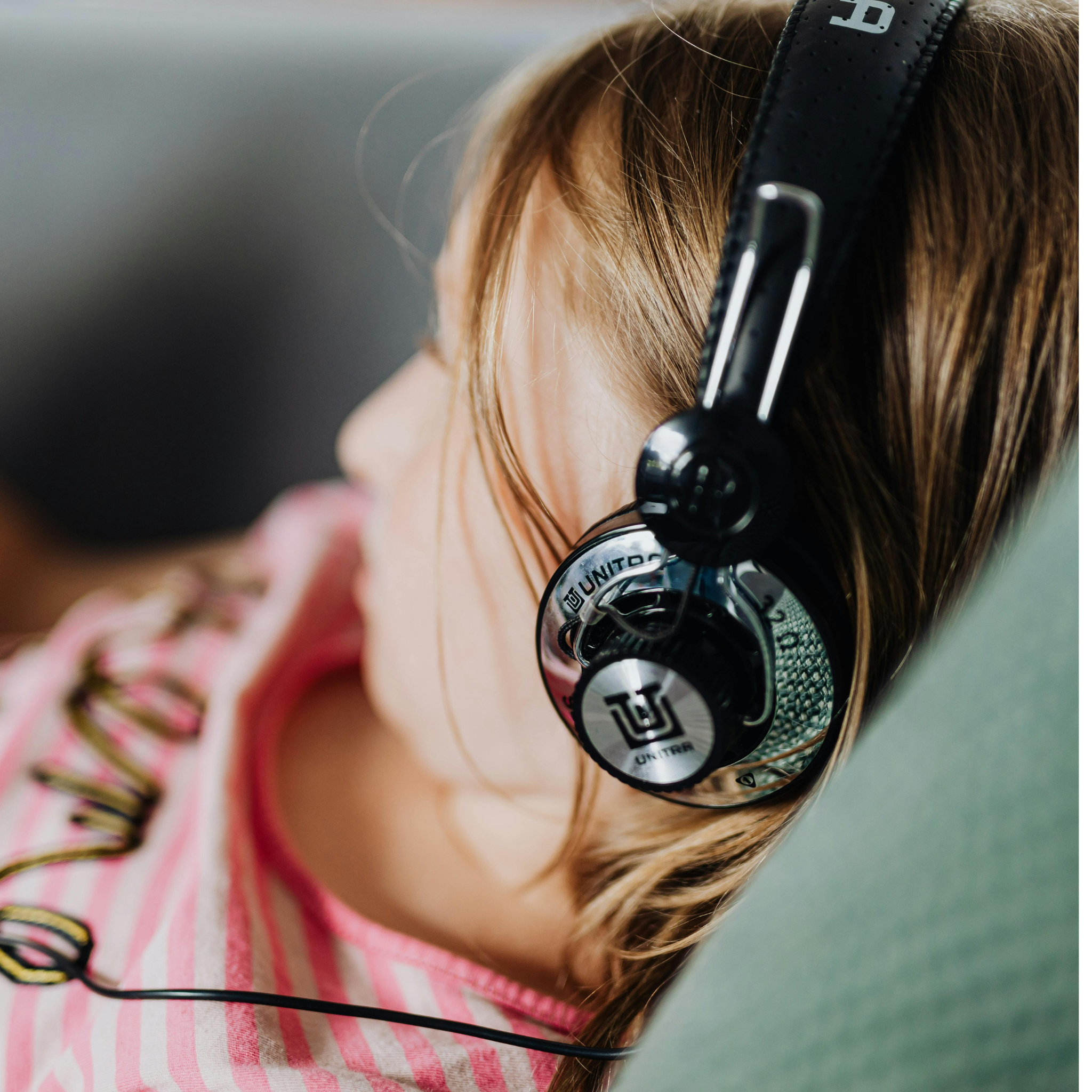
What's included in this collection.
Short, guided audios to help your child calm down, better manage their emotions and build confidence. Easy to integrate into daily routines (before bedtime, after school), these sessions use breathing and imagination to create moments of calm and safety every day.
Dragon BreathingRelease Stress and AngerOwl BreathingBrings Calm and StillnessOcean breathingFind Calm After the StormTree BreathingFor Grounding and StabilityCloud BreathingLet Go of Thoughts and WorriesLion BreathingBuild ConfidenceMeditation vs. Breathing — What's the Difference?
Distinct Mechanisms
Effective During a Crisis
Guided breathing acts directly on the autonomic nervous system through the vagus nerve and cardiac regulation. It is physiological, measurable — not cognitive. Meditation, on the other hand, works more on attention and awareness. This distinction is scientifically documented.
Concrete vs. Abstract.
"Breathe like a lion" gives the child something to do, immediately, with their body. "Be present" or "observe your thoughts" asks a child to manipulate abstract concepts that are difficult to grasp at their age. Breathing is an accessible tool for all ages.
Meditation generally requires a prior state of calm and an appropriate environment. Breathing, on the other hand, can be used during a crisis, anywhere. It is also a valuable tool that the child will be able to use on their own, once mastered, in moments when they are not feeling their best — for the rest of their life.
Action Over Stillness
Many children — particularly those who struggle to focus or stay still, including neurodiverse children — resist traditional meditation but embrace a breathing practice that engages the body and the imagination.
Quick and Noticeable Results
A few conscious breathing cycles produce measurable changes (heart rate, tension). Meditation has more cumulative effects over several weeks. For the parent in the middle of the storm on a Tuesday evening, the immediate effect makes all the difference.
What Parents and Kids Are Saying
"I like doing the breathing exercises before bed or when I feel stressed. I like that it's a bit like meditation but with breathing too. It helps me sleep better."
— Elie, age 9"When I feel the energy getting electric with my girls and bedtime wind-down becomes more challenging, a breathing session quickly changes everything. It breaks the routine, they experience a moment of connection with themselves, and calm returns almost instantly during the session. Even for my youngest — even if she doesn't follow every exercise, the soothing voice and music are enough to help her relax. Highly recommend!"
— Pascale, mom of 3 charming tornadoes"My daughter is highly sensitive and our evening routine often turned into an intense emotional storm. Since we added the breathing exercises to our daily routine, she is much calmer and falls asleep more quickly. I wish I had known about this sooner — even for myself!"
— Isabelle, mom of a sensitive little one